rooprect
⭐ 10/10
July 11, 2026
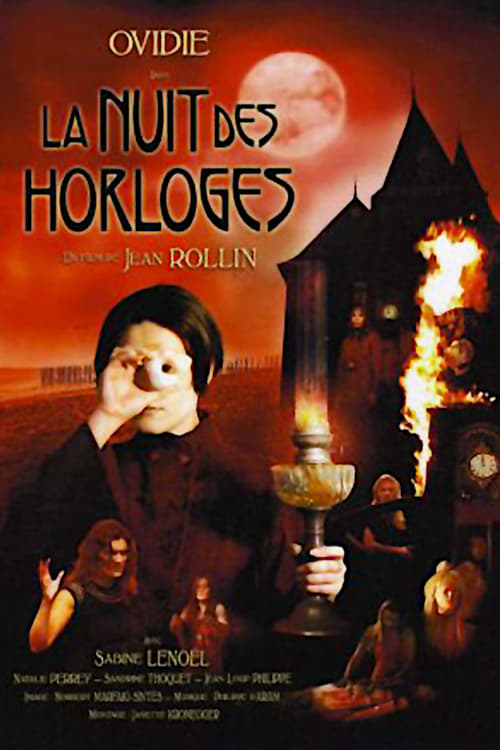
I'd been avoiding this, Jean Rollin's "final" film, for years. Final is in quotes because he actually did 1 more after this, but La nuit des horloges was written and delivered to be his last word.
I had avoided it because it had gotten lukewarm reviews on that other site where people suck at reviewing films, and I didn't want my sky-high esteem of the master to be tarnished by a lukewarm finale. BOY. WAS. I. WRONG. To any true Rollin fan, to a…
read the rest.
I'd been avoiding this, Jean Rollin's "final" film, for years. Final is in quotes because he actually did 1 more after this, but La nuit des horloges was written and delivered to be his last word.
I had avoided it because it had gotten lukewarm reviews on that other site where people suck at reviewing films, and I didn't want my sky-high esteem of the master to be tarnished by a lukewarm finale. BOY. WAS. I. WRONG. To any true Rollin fan, to any fan of cinéma fantastique, or to any fan of deep, poetic thoughts on the nature of art, if not the nature of our own existence, this is the word.
The story is about a young woman "Isabelle" who is haunted by the 1 memory she has of her dead cousin, a filmmaker named "Jean Michel". As she sleepwalks through a dreamscape of all the familiar locations where the real Jean Michel Rollin set his movies, she is visited by series of phantoms: creatures that the dead filmmaker had imagined. These phantoms direct Isabelle to seek out Jean Michel in an old haunted house where they warn her that clocks are portals to another world.
Like all Rollin films it's highly symbolic. Not just symbolic but consistent in the symbolism Rollin had developed as his unique cinematic vocabulary. We see familiar visions of old châteaux, ancient & abandoned, symbolizing the passing of time and the erosion of memory (as in Lips of Blood); we see his favourite cemetery Père Lachaise where he filmed so many epic scenes showing a city of the dead who outnumber and overwhelm the living trespassers; we see bright red clowns against dreary backgrounds (something Rollin had explained simply as seeing points of light in his mind), and most significantly in this film we hear the echoed words of the Two Orphan Vampires:
"The dead dream of the living, not the other way around."
It's that last statement that provides the thematic focus of this film and ultimately Rollin's last statement. In this movie, "Jean Michel" is the dead filmmaker who has dreamed (or is possibly still dreaming) of his phantoms, but there's a very sad air that all his phantoms are now orphans. They are mere fragments of what he wanted to show us before his own clock ran out.
One scene struck me silent, and I'm sure it'll sit with me for the rest of my life. In Père Lachaise Cemetery a dead woman returns to her crypt at daybreak but finds it locked. She collapses, sobbing, then begs Isabelle to take her away somewhere. But Isabelle cannot or will not. She leaves the dead woman at the locked gate of her own crypt.
A few scenes later, a beautiful woman stands in a burned out forest holding a dismembered heart, asking whose it is before realizing it's her own. She flies into a rage, shouting that the filmmaker Jean Michel was going to use her in a story, some grand vision which he'd been working on before he died. As with the dead woman at the crypt, Isabelle can't help her.
I'm suddenly reminded of the poem:
God pity them both! and pity us all,
Who vainly the dreams of youth recall;
For of all sad words of tongue or pen,
The saddest are these: 'It might have been!'
If you see what Rollin did here, you realize that this isn't just a farewell to his fans. It's an attempt to bid farewell to his own creations, his unfinished ideas and his unfinished dreams. Do the dead dream of the living? As one phantom says, "Perhaps Jean Michel is dreaming me right now. I hope he never wakes up."
show less