Brent Marchant
⭐ 4/10
January 5, 2025
Just as too many cooks can ruin the stew, too many story threads can ruin a movie, and that’s very much the case with writer-director Maura Delpero’s fourth feature film. This Golden Globe nominee for Best International Film follows the lives of a family in a village in the Italian Alps in 1944. The family patriarch and town schoolteacher, Cesare (Tommaso Regno), along with his wife and army of eight children shelter a pair of Italian army desert…
read the rest.
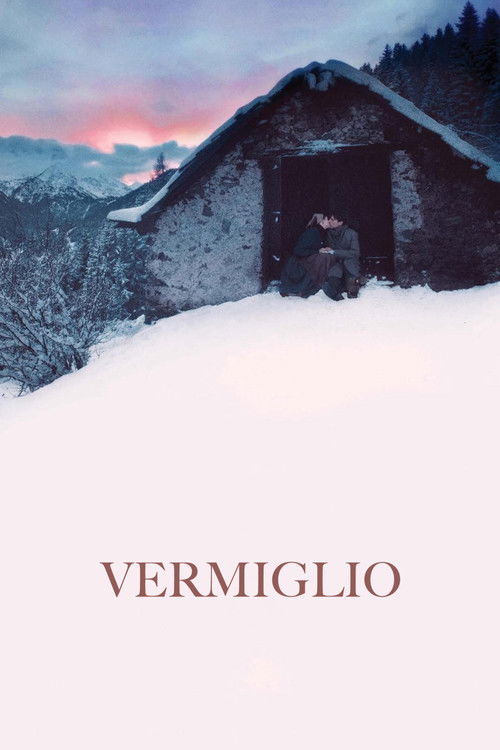
Just as too many cooks can ruin the stew, too many story threads can ruin a movie, and that’s very much the case with writer-director Maura Delpero’s fourth feature film. This Golden Globe nominee for Best International Film follows the lives of a family in a village in the Italian Alps in 1944. The family patriarch and town schoolteacher, Cesare (Tommaso Regno), along with his wife and army of eight children shelter a pair of Italian army deserters, hiding them from Axis Forces in search of the runaways. While in seclusion, one of the soldiers, Pietro (Giuseppe Di Domenico), falls in love with Cesare’s eldest daughter, Lucia (Martina Scrinzi), eventually marrying her and fathering a child. However, when the war ends and Pietro travels to Sicily to visit his family, all hell breaks loose, revealing a deep dark secret and creating havoc for his pregnant wife and her family. Had the film stuck to this storyline, “Vermiglio” might have been an engaging watch. But that, unfortunately, is not the case. The picture incorporates an array of other plot lines, seriously diluting the narrative and making for a very unfocused, incoherent watch (particularly in the first hour). Most of these extraneous story arcs remain largely underdeveloped, and much of what could have been done with the principal narrative thrust remains largely unexplored. To make matters worse, the picture’s glacial pacing at the outset tries viewer patience to the point where checking one’s watch becomes a regular activity. Only when the script settles on its primary tangent does the film begin to become remotely watchable, but, by that point (nearly an hour in), it’s too late to salvage the viability of the production, especially since viewer interest in any of these characters has long since evaporated. It’s a shame that the filmmakers chose to employ this approach in telling this story, because, if it had been judiciously pared down to the basics that work best, this could have been a beautiful, compelling release. Instead, we’re left with a mishmash of ideas, themes and narrative elements that leaves audiences clamoring for an end that’s far too long in coming.
show less
CinemaSerf
⭐ 7/10
January 22, 2025
With the war now heading firmly in the favour of the allies, Italian soldiers are deserting in droves and one of them, Sicilian "Pietro" (Giuseppe De Domenico) arrives, wounded, in the eponymous Italian village where they know what he has done. Opinion is divided on what to do next, given many have lost their sons in the war or are still ignorant of their whereabouts, but he has the support of the influential schoolmaster "Graziadei" (Tommaso Rag…
read the rest.
With the war now heading firmly in the favour of the allies, Italian soldiers are deserting in droves and one of them, Sicilian "Pietro" (Giuseppe De Domenico) arrives, wounded, in the eponymous Italian village where they know what he has done. Opinion is divided on what to do next, given many have lost their sons in the war or are still ignorant of their whereabouts, but he has the support of the influential schoolmaster "Graziadei" (Tommaso Ragno). It's his daughter "Lucia" (Martina Scrinzi) to whom he takes a bit of a shine, and she readily reciprocates. They marry and all seems rosy until the war actually ends and he has to return home to his mother. This is when the wheel rather comes off this idyllic scenario as his unanswered letters are eventually explained by answers that rock this tiny village and the whole "Graziadei" family. Though the thrust of the story is all rather predictable, the characterisations are poignant, powerful and are cleverly crafted to show us a family dynamic that is not only dealing with the end of the war, but with disease, tragedy, resentment and bitterness amongst eight children who are growing into people in their own right with differing aspirations for education, religion, family and future. Roberta Rovelli features a little less than I'd have liked as the mother of this diverse brood but her nuanced and considered effort as the potato-counting antitheses to her proud and traditionalist husband works well at providing a bedrock for the story. I also quite enjoyed the efforts of the younger children, too. Their curiosity and vibrancy offering us quite an apt tonic to counteract some of the more serious elements as the storyline touches upon issues of betrayal, shame and grief. It's gloriously photographed at altitude and the changing seasons reflect well the blossoming of a family that is certainly not the "Waltons". Don't expect it to hit the ground running, nor for there to be any definitive conclusion. This is us observing a year or so in the turbulent lives of a family, a village and a nation and if you just let it wash over you then it's surprisingly affecting.
show less
badelf
⭐ 9/10
June 28, 2026
Summary: 9/10: a visually stunning, thematically rich meditation on family, power, tradition, and the slow work of change, anchored in historical specificity while speaking to timeless questions about who holds power and at what cost.
What appears to be a slice-of-life film based on Maura Delpero's experiences growing up in the Italian Alps reveals itself as something far more complex: a richly layered drama of family life and relationships se…
read the rest.
Summary: 9/10: a visually stunning, thematically rich meditation on family, power, tradition, and the slow work of change, anchored in historical specificity while speaking to timeless questions about who holds power and at what cost.
What appears to be a slice-of-life film based on Maura Delpero's experiences growing up in the Italian Alps reveals itself as something far more complex: a richly layered drama of family life and relationships set at the end of World War II. Delpero herself wasn't even born yet when these events transpired, which means we must assume that life in a remote Alpine village has not changed much in seventy years, that the rhythms and structures she witnessed growing up were largely unchanged from those her grandmother knew.
Her visual capture is remarkable in that it has the appearance and feel of a documentary. Even the unevenness of the editing and cinematography appears intentional, designed to yield the impression of a late 1940s capture, as if we're watching footage unearthed from the period itself. The natural light cinematography, the handheld moments, the patient observation of daily routines all contribute to a neorealist aesthetic that feels both contemporary and historically grounded. The film's numerous awards, including the Grand Jury Prize at the 2024 Venice Film Festival, are well-deserved.
But the true depth of Vermiglio lies in its examination of patriarchal structures and the fissures already forming within them. In that time and place, men make decisions, daughters are expected to obey, and traditional roles remain largely unquestioned.
Cesare, the head of the household, a teacher and highly educated man, is clearly conflicted between his role as patriarch and his more liberal values. He's educated enough to understand equality, progressive enough to question tradition, yet trapped within a system he perpetuates even as he doubts it. It's a nuanced portrait of complicity, of how intelligent people can recognize injustice and still enforce it because that's what the structure demands.
Ada, played beautifully by Rachele Potrich, emerges as almost a feminist rebel within this constrained world. She refuses to accept limitations quietly, pushes against expectations, embodies the future struggling to be born. Delpero doesn't make her a modern anachronism; Ada's rebellion, and that of her role model, Virginia, is of her moment, plausible within the world as it exists, but pointing toward possibilities not yet realized.
The film operates with patience and restraint, trusting the audience to notice what's unspoken, to feel the weight of traditions that no longer serve the living. It's a portrait of a world suspended between eras, between the patriarchal past and the stirrings of a new future, and Delpero captures that transitional moment with extraordinary grace.
show less