VashistaBhat999
⭐ 10/10
September 20, 2026
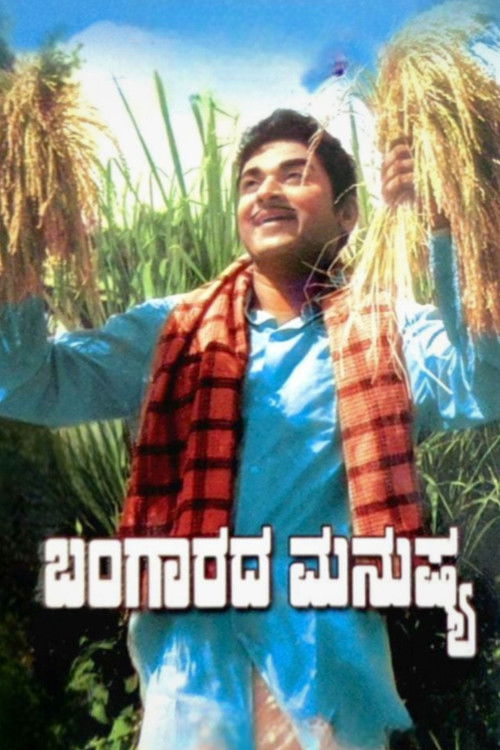
**Bangaarada Manushya: A Masterpiece Beyond Time**
**Movie Review/Analysis: **
**General Information:**
Since Kannada Film Industry (KFI)'s inception in 1934, there have been numerous classics, and among those numerous classics, one classic stands tall and the name of that classic is Bangaarada Manushya. For me, Dr. Rajkumar is the greatest actor of all-time in the history of cinema, and all movies of Dr. Rajkumar are masterpiece…
read the rest.
**Bangaarada Manushya: A Masterpiece Beyond Time**
**Movie Review/Analysis: **
**General Information:**
Since Kannada Film Industry (KFI)'s inception in 1934, there have been numerous classics, and among those numerous classics, one classic stands tall and the name of that classic is Bangaarada Manushya. For me, Dr. Rajkumar is the greatest actor of all-time in the history of cinema, and all movies of Dr. Rajkumar are masterpieces, and it would not be an exaggeration if I said that Bangaarada Manushya stands tall in the list of movies that are masterpieces (Both Dr. Rajkumar and non-Dr. Rajkumar movies). I have seen numerous films across various languages, and no film has ever moved me as much as Bangaarada Manushya, which is my favourite movie of all-time and personally for me, it is the greatest movie of all-time in the history of cinema as well and I know that this is the bold take because old Kannada classics don't have much visibility outside Karnataka but it is just the case of me being honest to my instincts as visibility is not equal to quality. I watched Bangaarada Manushya for the first time in 2003 in Sri Nakoda DVD as a four year old boy, and since then I don't know or have no count regarding how many times I have rewatched it, it is truly a perfect and a flawless movie. Bangaarada Manushya was based on the novel of the same name by T.K. Rama Rao and it was directed by Siddalingaiah and this film was the sixth collaboration between Dr. Rajkumar and Siddalingaiah after Mayor Muthanna, Baalu Belagithu, Namma Samsara, Thayi Devaru and Nyayave Devaru. Bangaarada Manushya was released on 31st March 1972.
**The Plot:**
Rajeeva (Dr. Rajkumar), who is on his way to visit his sister, Sharada, but to his astonishment, he discovers upon arrival that his brother-in-law has died. Sharada (Adavani Lakshmi Devi) is the elder sister of Rajeeva, and Ramachandra (Loknath), who is the elder brother of Rajeeva and Sharada, is controlled by his wife, Chaya (M.N. Lakshmi Devi), and listening to her words, he walks away without giving a single penny, and now no one is there to take care of Sharada’s family. Rajeeva decides to stay, and he takes a loan from Rachutappa (T.N. Balakrishna), the village head, and sends Sharada’s sons, Keshava and Chakrapani (Vajramuni and Srinath), to Bangalore for higher studies. Rajeeva’s brother-in-law’s land is occupied by Honna (MP Shankar), and after a fight with Honna, Rajeeva takes back his brother-in-law’s land and begins irrigation on it.
Meanwhile, Rajeeva falls in love with Lakshmi (Bharathi), his neighbor's daughter. Motivated to improve their lives further, Rajeeva purchased 25 acres of barren land near the village from the government, taking the loan from Rachutappa. Through his efforts, he becomes a rich man who is successful and respected in the village, earning substantial profits.
However, Rajeeva frequently travels to Belgaum, another city, every six months. He actually visits a woman named Sharavathi (Aarathi) and her son, Kishore (Master Basavaraj), who are living in Belgaum. Honna and a few of the others steal from Rajeeva’s farm and are caught by Goffuru (Joker Shyam), a villager who is Rajeeva’s friend. A fight ensues where Rajeeva, along with Goffuru and his friends, manages to tie Honna to a tree, and then they say that they stole because they did not have land. Rajeeva helps them to purchase land through cooperative farming. Keshava marries Nagaveni (BV Radha), who is the daughter of Ramachandra. Chakrapani agrees to marry Nandini, who is a daughter of a family friend. Sridhar (Shringar Nagaraj), a friend of Keshava and Chakrapani, whose education was also sponsored by Rajeeva, marries Saraswati (Kala), who is Sharada's only daughter.
Eventually, Rajeeva agrees to marry Lakshmi. Patil (Hanumantachar), a neighbor of Sharavathi, comes to Keshava’s house to cancel his transfer, and he sees Rajeeva’s photo and identifies him as Kasturi, and then he informs Keshava about Rajeeva's periodic visits to Belgaum. To confirm this troubling news, Keshava travels to Belgaum and sees Rajeeva's photo displayed in Sharavathi's house. When asked about Rajeeva, Sharavathi replies, "Mane Yajamanradu" (the house owner). Filled with disrespect for Rajeeva, Keshava confronts him and requests 50,000 Rupees to start a business. Rajeeva was firm that he would give Keshava the money once he understood its value.
In a fit of anger, Keshava reveals to Lakshmi and Sharada about Sharavathi, accusing Rajeeva of adultery. However, both Lakshmi and Sharada refuse to believe the accusation, with Sharada saying that Rajeeva was a “Bangaarada Manushya," and they decide not to disclose their knowledge about Sharavathi to Rajeeva. One afternoon, while taking lunch to her husband in the field, Lakshmi is chased by a bull. While Rajeeva is fending off the bull, Lakshmi falls into a nearby well. After chasing the bull, Rajeeva dives in to save her, but it is too late, and Lakshmi is already dead.
Nagaveni convinces Keshava to seek legal assistance in reclaiming what is rightfully theirs. Keshava visits Rajeeva to discuss the matter, leading to a disagreement between Keshava and Sharada. During the argument, Keshava directs hurtful words at Rajeeva, accusing him of stealing their property and taking advantage of their situation. He even claims that the rice in front of him is not his. Disturbed by this, Rajeeva washes his hands without consuming a morsel of rice. He quietly exits the house while silently praying for the well-being of the villagers.
Chakrapani locates Sharavathi and brings her to Rajeeva's house to showcase Rajeeva's magnanimity to Keshava. Sharavathi reveals that she is their (Keshava, Chakrapani, and Saraswathi's) half-sister, an illegitimate child of Sharada's husband. Rajeeva had kept this secret and supported her throughout the years. Determined to find Rajeeva, they set out on a search but are unable to locate him. Rachutappa comes and, remembering their bond, stands in front of Rajeeva’s photo, wishing him happiness wherever he is and asking him to pray for the villagers' well-being. Rajeeva quietly walks into the sunset.
**Story Analysis:**
The story of Bangaarada Manushya is exceptionally strong, perfect, flawless, and has a profound depth in my opinion because Rajeeva’s journey has a clear emotional and moral foundation from the beginning. He arrives merely intending to visit his sister, but the death of his brother-in-law immediately places him in a situation where he must make a choice. When Ramachandra walks away without financially supporting Sharada and her children, Rajeeva voluntarily gives up his own plans and assumes responsibility for a family that could otherwise collapse.
What makes Rajeeva compelling is that his sacrifices are translated into action rather than words. He borrows money, sends Keshava and Chakrapani to Bangalore for higher studies, reclaims the occupied agricultural land, cultivates it, supports Sridhar's education, purchases barren land and transforms himself into a successful and a rich farmer. Therefore, his growth from an educated young man arriving in the village to one of its most respected figures feels earned through sustained effort. The writing is natural, realistic and exceptional here.
The agricultural storyline also expands Rajeeva's characterization beyond his immediate family. When Honna and the other men steal because they lack land, Rajeeva does not merely punish them. After confronting them, he helps them obtain land through cooperative farming. This shows that his concern extends to the wider village. His prosperity consequently becomes connected with the prosperity of people around him. The villagers subplot becomes an integral part of the story to show Rajeeva's concern extending to the whole village, and he developing the village, and the subplot of Shivalingu, Rachutappa’s son, who is a spoiled brat, addresses the generation gap and also acts as a catalyst for Rajeeva's marriage.
The romantic relationship with Lakshmi provides another important dimension. After spending much of his life working for others, Rajeeva appears to finally be approaching personal happiness when he agrees to marry her. Her sudden death therefore becomes particularly powerful because happiness is taken away from Rajeeva just when it appears within his reach. The bull-and-well sequence functions not merely as tragedy but as a major emotional turning point.
The Sharavathi subplot is especially effective because it creates a mystery around Rajeeva without immediately revealing the truth. His regular journeys to Belgaum, Patil identifying him as "Kasturi," Rajeeva's photograph inside Sharavathi's house, and Sharavathi referring to him as Mane Yajamanru all provide enough information for Keshava to construct a completely different interpretation of Rajeeva's actions.
This leads naturally into one of the story's strongest ideas: the same secrecy through which Rajeeva protects another person's dignity eventually becomes the basis on which his own character is questioned. Rajeeva could have protected his reputation by exposing the truth about Sharada's husband, but doing so would also expose Sharavathi's parentage and his late brother-in-law's actions. Instead, he silently carries that burden and walks away, embodying selflessness. His late brother-in-law had sponsored his education, which is conveyed through a dialogue in the beginning of the film, and Rajeeva repays that gratitude in a much profound and a deeper way, that makes him an ideal human. Rajeeva performs Keshava and Chakrapani’s wedding with great pomp, and his own marriage is very simple in a temple, which shows his humbleness despite the wealth he had created.
The final conflict therefore has considerable emotional depth. Keshava is not simply attacking a stranger; he is attacking the very man who financed his education and spent years building the family's prosperity. When Keshava tells Rajeeva that even the clothes he is wearing, the house he is staying, the rice before him, does not belong to him, Rajeeva's response is more powerful because it is restrained. He does not defend himself through a lengthy speech. He washes his hands without eating a single morsel and walks away.
Sharavathi's subsequent revelation provides the emotional payoff. Only after Rajeeva has disappeared does the family fully understand what he had been protecting. His silence is retrospectively transformed from suspicious behavior into another sacrifice. The title Bangaarada Manushya consequently becomes integral to the story rather than merely complimentary: Rajeeva earns that description through what he does when nobody understands or recognizes his actions. Rajeeva is truly a Bangaarada Manushya. It has to be noted that Rajeeva is the one who is driving the story.
The ending completes this beautifully. There is no conventional reconciliation in which Rajeeva returns and everyone apologizes to him. They search for him and cannot find him. Rachutappa's words before Rajeeva's photograph, followed by Rajeeva walking silently into the sunset, preserve both the sadness and dignity of his departure. He leaves behind the family he supported, the land he developed and the village he helped transform. The writing is exceptional, natural and realistic throughout the film. For all the reasons mentioned above, the story is timeless and has aged exceptionally well.
My Rating for Story: 5/5 or 10/10
**Screenplay Analysis:**
The screenplay is flawless, gripping, tight and has a strong and profound cause-and-effect progression. The brother-in-law's death creates Sharada's crisis; Ramachandra's abandonment motivates Rajeeva to remain; the family's financial difficulties leads him towards agriculture; agriculture creates his relationship with the wider village; his success enables him to educate the younger generation; his secret assistance to Sharavathi creates suspicion; that suspicion feeds Keshava's resentment; and Keshava's accusation finally causes Rajeeva's departure. The major events are therefore interconnected rather than functioning as unrelated episodes. Because of the strong and profound cause-and-effect progression, the screenplay is fast-moving.
Another strength is the gradual escalation of stakes. The screenplay begins with survival, expands into family responsibility, then into agriculture, moves towards romance and personal happiness, introduces mystery and suspicion, and then moves into social upliftment, and the mystery and suspicion gets deepened, and ultimately becomes an intense family drama revolving around dignity, gratitude and sacrifice. This is precisely the reason why screenplay is gripping and tight, with no second of boredom.
The Sharavathi track is particularly well structured as a delayed revelation. The screenplay first gives the audience suspicious pieces of information instead of immediately explaining them. Rajeeva's visits to Belgaum become a narrative question. Patil's identification intensifies that question, Keshava's visit seemingly confirms his suspicion, and Sharavathi's statement further complicates matters. The eventual revelation that she is the illegitimate daughter of Sharada's husband recontextualizes everything that preceded it.
There is also effective contrast throughout the screenplay. Rajeeva builds while others initially abandon; he gives while Keshava later accuses him of taking; he responds to Honna and other villagers by helping them become landowners; and while his actions earn him respect throughout the village, misunderstanding ultimately drives him away from his own family. These contrasts strengthen the emotional impact without changing Rajeeva's fundamental characterization.
Most importantly, the screenplay allows actions and visual moments to carry emotion. Rajeeva reclaiming and cultivating the land, helping Honna, trying desperately to save Lakshmi, washing his hands without eating, leaving the house silently, the family searching unsuccessfully for him, Rachutappa standing before his photograph, and finally Rajeeva walking into the sunset all communicate meaning beyond dialogue.
The climax is especially powerful because the screenplay postpones vindication until Rajeeva is no longer there to receive it. Had Sharavathi revealed the truth before Rajeeva left, the conflict could have ended through an immediate reconciliation. Instead, the truth comes too late. That choice gives the ending its bittersweet emotional payoff: Rajeeva is finally understood precisely when his family can no longer tell him that they understand him.
There are five songs in Bangaarada Manushya: Nagunagutha Nali, Baala Bangara, Aagadu Yendu, Aaha Mysooru, and Hanihani Goodidre, and the placement of all the songs is excellent in my opinion. Nagunagutha Nali appears right at the beginning, when Rajeeva gets down from the train and is on his way to his sister's house. Baala Bangara appears after Lakshmi is introduced. Aagadu Yendu appears when Rajeeva is converting barren land into prosperous agricultural land. Aaha Mysooru appears when Rajeeva and Lakshmi are sent to a fair, where they dream about each other, establishing their love for one another. Hanihani Goodidre appears when the villagers celebrate on the success of the lands that were given to them with Rajeeva's help, showcasing how much respect he has earned among them.
There are two fight sequences in Bangaarada Manushya, both of which are exceptionally choreographed and well placed in my opinion. The first fight takes place between Rajeeva and Honna when Rajeeva reclaims his brother-in-law's land, while the second fight takes place when Rajeeva confronts Honna and the other villagers who have come to steal from his farm. There are sufficient comedy scenes arising from the story, and the characters, and they are exceptionally well done. The five songs, comedy, and two fight scenes in a tight and gripping screenplay ensures that there is no second of boredom and the entertainment value is absolutely full. Each and every scene in Bangaarada Manushya is a gem.
My Rating for Screenplay: 5/5 or 10/10
**Acting Analysis:**
Dr. Rajkumar, whom I rate as the greatest actor of all-time in the history of cinema, has played every kinds of roles with a flawless perfection that cannot be matched, delivers an extraordinary flawless performance as Rajeeva and carries the film exceptionally well. Rajeeva is a character who goes through several different emotions and phases throughout the story, and Dr. Rajkumar portrays each of them naturally and convincingly. Right from Rajeeva getting down from the train and singing Nagunagutha Nali until the climax, Dr. Rajkumar dominates each and every frame he is a part of. His performance captures Rajeeva’s determination, affection towards his family, love for Lakshmi, concern for the villagers, emotional suffering and, most importantly, his selfless nature.
One of the strongest aspects of Dr. Rajkumar’s performance is his ability to convey Rajeeva’s personality through his flawless facial expressions, body language and dialogue delivery and in the climax scene where he has to convey everything through facial expressions and body language rather than depending entirely on dialogue, he does it exceptionally well. Whether Rajeeva is singing Nagunagutha Nali, working hard to transform barren land, confronting Honna, interacting affectionately with Lakshmi, helping the villagers or silently carrying the responsibility of supporting Sharavathi and Kishore, Dr. Rajkumar makes the character believable and emotionally engaging.
His performance in the emotional sequences are particularly outstanding. Rajeeva’s desperation while trying to save Lakshmi and his grief following her death are portrayed with tremendous emotional intensity. Similarly, Dr. Rajkumar is exceptional during the confrontation with Keshava towards the climax. When Keshava accuses Rajeeva of taking advantage of their family and tells him that even the rice in front of him does not belong to him, Rajeeva does not respond with an exaggerated outburst. Dr. Rajkumar instead conveys his pain through restrained expressions and silence. Rajeeva washing his hands without eating a morsel and quietly walking away becomes even more powerful because of the restraint in his performance. Dr. Rajkumar also shows extraordinary screen presence while portraying the role of Rajeeva, and his fighting with Honna in both the fight sequences are extremely well-done.
Bharathi delivers a very good performance as Lakshmi and shares excellent chemistry with Dr. Rajkumar. She convincingly portrays Lakshmi’s affection and complete trust in Rajeeva, particularly when allegations concerning Sharavathi are raised and Lakshmi refuses to believe that Rajeeva could have betrayed her. Her performance also contributes significantly to making the romantic portions between Rajeeva and Lakshmi pleasant and emotionally effective.
Adavani Lakshmi Devi delivers a strong performance as Sharada. Her character carries considerable emotional importance because Rajeeva’s decision to remain in the village begins with his concern for her and her children. Her unwavering trust in Rajeeva, even when Keshava makes serious accusations against him, makes their sibling relationship convincing.
Vajramuni performs effectively as Keshava, particularly during the later portions of the film when the character becomes suspicious and increasingly disrespectful towards Rajeeva. His performance during the confrontation with Rajeeva is important because Keshava’s harsh words have to create the emotional impact required for Rajeeva’s eventual departure, and Vajramuni handles those portions very well.
Srinath gives a solid performance as Chakrapani and provides an effective contrast to Keshava, particularly during the concluding portions when he discovers the truth about Sharavathi and brings her to the family. Aarathi is also very effective as Sharavathi. Although her character is concealed from the main family for much of the story, she becomes extremely important during the climax, and her revelation about her true identity provides the emotional payoff to the mystery surrounding Rajeeva’s visits to Belgaum.
T. N. Balakrishna delivers a very good performance as Rachutappa and makes Rajeeva’s relationship with him convincing. His presence becomes especially important in the conclusion, when Rachutappa stands before Rajeeva’s photograph and remembers him after Rajeeva has disappeared. Loknath as Ramachandra, M. N. Lakshmi Devi as Chaya, M. P. Shankar as Honna, B. V. Radha as Nagaveni, Shringar Nagaraj as Sridhar, Kala as Saraswati, Joker Shyam as Goffuru, Dwarakish as Shivalingu and the rest of the supporting cast complement the lead performances effectively.
Overall, the performances are excellent, with Dr. Rajkumar being the heart and soul of the film. His portrayal gives Rajeeva tremendous dignity, emotional depth and screen presence, while Bharathi and the entire supporting cast complement him very well. The performances play a major role in making the characters, relationships, conflicts and emotional payoff of Bangaarada Manushya so effective that I never get bored no matter how many times I see it. The acting performances are timeless and have aged exceptionally well.
My Rating for Acting: 5/5 or 10/10
**Direction Analysis:**
Siddalingaiah’s direction is excellent in my opinion. He handles the story of Bangaarada Manushya exceptionally well, maintaining a strong emotional connection with Rajeeva and his journey throughout the film. The film moves through family drama, agriculture, romance, action, comedy, tragedy, and emotional conflict, and Siddalingaiah brings all these elements together effectively without allowing them to feel disconnected from the central story.
One of the greatest strengths of his direction is the way Rajeeva’s character is established through his actions. Rather than merely presenting Rajeeva as a good man through dialogues, Siddalingaiah repeatedly shows his qualities through what he does. Rajeeva stays behind to support Sharada and her children, educates Keshava and Chakrapani, reclaims his brother-in-law’s land, works hard to develop agriculture, helps the villagers obtain their own lands, secretly takes responsibility for Sharavathi and Kishore, and continues helping others without expecting recognition. This makes Rajeeva’s characterization extremely powerful.
Siddalingaiah also handles the agricultural portions exceptionally well. Rajeeva’s transformation of barren land into prosperous agricultural land is presented with great energy and creates a strong sense of progress. The development of Rajeeva from a man who arrives at his sister’s village into a successful and highly respected person is convincing and satisfying. At the same time, the director establishes the pleasant rural atmosphere of the film very effectively.
The romantic portions between Rajeeva and Lakshmi are also handled beautifully. Their relationship develops naturally, and the lighter and happier moments involving them provide an effective contrast to the tragedy that follows. Lakshmi’s death is directed with strong emotional intensity. Rajeeva desperately trying to save her from the bull and subsequently diving into the well, only to discover that she is already dead, makes the sequence extremely emotional.
The two fight sequences are also directed with very good energy. The confrontation between Rajeeva and Honna while reclaiming his brother-in-law’s land establishes Rajeeva’s determination, while the later fight involving Honna and the villagers who steal from Rajeeva’s farm is handled effectively before the situation develops into Rajeeva helping them obtain land through cooperative farming. Siddalingaiah’s direction ensures that the film is highly energetic throughout, and the atmosphere remains pleasant throughout, with an exceptional presentation throughout the film.
The songs are also handled extremely well. Siddalingaiah integrates them naturally into the situations and uses them to complement different stages of Rajeeva’s journey, whether it is his arrival, his relationship with Lakshmi, his agricultural development, or the villagers celebrating their prosperity. The comedy is also handled extremely well where Siddalingaiah integrates them naturally into situations.
The emotional portions towards the climax are where Siddalingaiah’s direction reaches its peak in my opinion. When Keshava accuses Rajeeva of taking advantage of their family and tells him that even the rice before him does not belong to him, the scene is handled with restraint and is realistic and natural rather than the unnecessary melodrama. Rajeeva washing his hands without eating even a morsel and quietly leaving the house makes the sequence extremely powerful.
The subsequent revelation involving Sharavathi further increases the emotional impact because the truth about Rajeeva is revealed only after he has left. The family searching for him and failing to find him creates a strong emotional payoff. Finally, Rachutappa standing before Rajeeva’s photograph, remembering him and wishing for his happiness, followed by Rajeeva silently walking into the sunset, provides an exceptionally powerful conclusion.
Overall, Siddalingaiah handles the family drama, agricultural theme, romance, action, comedy, tragedy, character development and emotional portions exceptionally well. Most importantly, his direction ensures that Rajeeva remains the emotional heart of the film from beginning to end.
My Rating for Direction: 5/5 or 10/10
**Music Analysis:**
The music of Bangaarada Manushya is extraordinary in my opinion and is one of the greatest strengths of the film. G. K. Venkatesh’s background score complements the story, emotions, rural atmosphere and Rajeeva’s journey exceptionally well. Rather than overpowering the scenes, the background score strengthens their emotional impact and contributes significantly to the overall energy and atmosphere of the film.
The background score works particularly well during Rajeeva’s agricultural journey and the emotional portions of the story. It complements his determination and progress as he transforms his family’s circumstances and contributes towards the development of the village. The score is equally effective during the more emotional portions involving Lakshmi and during the conflicts towards the climax. It enhances the emotions already present in the story without making them feel artificially manufactured.
The film has five songs: Nagunagutha Nali, Baala Bangara, Aagadu Yendu, Aaha Mysooru, and Hanihani Goodidre. In my opinion, all five songs are excellent and contribute significantly to the musical identity of the film.
Nagunagutha Nali, written by Hunsuru Krishnamurthy, is my favourite song of all time, and I also consider it the greatest song of all time. The song has an uplifting and philosophical quality that perfectly complements Rajeeva and the beginning of his journey. Its lyrics, melody and overall musical composition come together exceptionally well. For me, it goes beyond simply being an excellent film song and stands as an all-time masterpiece.
Baala Bangara, also written by Hunsuru Krishnamurthy, is another excellent song. It complements the romantic side of the film and the relationship between Rajeeva and Lakshmi beautifully. The melody and lyrics create a pleasant feeling and contribute effectively to the lighter and happier phase of Rajeeva’s life as he watches Lakshmi sing.
Aagadu Yendu, written by R. N. Jayagopal, is an exceptionally inspiring song. It accompanies Rajeeva’s efforts to transform barren land into prosperous agricultural land, and its motivational quality perfectly complements his determination and hard work. The song captures the spirit of perseverance that forms an important part of Rajeeva’s character and the agricultural theme of the film.
Aaha Mysooru, written by Chi. Udayshankar, is a beautiful romantic duet song that complements the growing love between Rajeeva and Lakshmi. The song has a pleasant and joyful quality, and the music effectively captures the happiness associated with their relationship.
Hanihani Goodidre, written by Vijayanarasimha, is another excellent song that complements the film’s themes of collective progress and prosperity. It accompanies the villagers celebrating the lands that they received with Rajeeva’s help, and the celebratory nature of the music beautifully reflects their happiness and the respect Rajeeva has earned through his contributions to their lives.
Another major strength of the soundtrack is its variety. The songs are not repetitive in their purpose or emotional quality. Nagunagutha Nali has an uplifting and philosophical character, Baala Bangara and Aaha Mysooru contribute to the romantic dimension, Aagadu Yendu represents determination and progress, while Hanihani Goodidre celebrates collective prosperity. As a result, the soundtrack complements several different dimensions of the story and Rajeeva’s journey.
Overall, G. K. Venkatesh’s music is outstanding in my opinion. The background score enhances the emotions, atmosphere and energy of the film, while all five songs are excellent and complement the narrative beautifully. With Nagunagutha Nali being my favourite song of all time and what I consider the greatest song of all time, the music of Bangaarada Manushya holds an especially significant place for me and contributes enormously to my experience of the film.
My Rating for Music: 5/5 or 10/10
**Dialogues Analysis:**
The dialogues of Bangaarada Manushya, written by Hunsuru Krishnamurthy, are excellent in my opinion. The dialogues complement the story, characterization and emotions exceptionally well. They are meaningful without feeling unnecessarily artificial and play an important role in establishing the relationships between the characters, particularly Rajeeva’s relationship with his family and the villagers.
One of the greatest strengths of the dialogues is the way they complement Rajeeva’s characterization. His words reflect his maturity, determination, compassion and selflessness. At the same time, the film does not depend entirely on lengthy dialogues to establish his qualities. Rajeeva’s actions frequently speak for him, allowing his dialogues to feel natural to the situations rather than functioning merely as explanations of his character.
The dialogues also work very well in the portions involving agriculture and village development. Rajeeva’s interactions with the villagers complement the film’s themes of hard work, cooperation and collective prosperity. This becomes particularly effective when Rajeeva learns why Honna and the others have stolen from his farm and ultimately helps them obtain their own land. The dialogues surrounding such situations reinforce Rajeeva’s belief in solving problems constructively rather than simply punishing people.
The conversations involving Rajeeva and Lakshmi effectively complement their relationship. Their interactions bring warmth to the film and contribute to the pleasant romantic portions before the story becomes increasingly emotional and tragic.
The dialogues become particularly powerful during the Sharavathi storyline. When Keshava visits Sharavathi’s house and asks about Rajeeva, her description of him as “Mane Yajamanru” creates a misunderstanding because Keshava interprets those words differently from their actual context. This demonstrates how even a small dialogue can become important to the progression of the story.
The confrontation between Keshava and Rajeeva towards the climax contains some of the most emotionally powerful dialogue in the film. Keshava’s accusations become increasingly hurtful as he questions Rajeeva’s integrity and accuses him of taking advantage of their family. The moment when he tells Rajeeva that even the rice in front of him does not belong to him is especially impactful. The words become devastating because they are directed at the man who had sacrificed so much for the same family.
What makes this sequence even more effective is Rajeeva’s restrained response. Instead of answering every accusation with lengthy explanations or attempting to prove his sacrifices, Rajeeva remains dignified. His silence becomes as important as the spoken dialogue. When he washes his hands without consuming even a morsel of rice and quietly leaves, the absence of an elaborate verbal response increases the emotional impact of the scene.
Sharavathi’s revelation after Rajeeva’s departure is equally important. Her words completely change the family's understanding of Rajeeva’s visits to Belgaum and reveal the extent of his sacrifice. The dialogues provide the emotional payoff to a mystery that had gradually developed throughout the film, while also making Keshava realize how severely he had misunderstood Rajeeva.
The concluding portions are also beautifully written. Rachutappa remembering Rajeeva and standing before his photograph provides an emotional farewell to the character. By this stage, the dialogues do not need to explain Rajeeva’s greatness because the entire story has already demonstrated it. They instead complement the sadness of his absence and the respect he has earned from the people whose lives he transformed.
Overall, Hunsuru Krishnamurthy’s dialogues are exceptionally effective in my opinion. They complement the characterization, family relationships, romance, agricultural themes, conflicts and emotional depth of the story. Most importantly, the dialogues know when the characters should speak and when Rajeeva’s actions and silence should communicate his emotions instead. This balance makes the dialogue writing one of the major strengths of Bangaarada Manushya.
My Rating for Dialogues: 5/5 or 10/10
**Conclusion:**
Overall, Bangaarada Manushya is not merely a masterpiece for me; it is my favourite movie of all time and personally the greatest movie of all-time. Having watched numerous films across different languages, no other film has moved me emotionally or connected with me as deeply as Bangaarada Manushya. I first watched the film in 2003 as a four year old boy, and more than two decades later, after countless rewatches, its impact on me has not diminished. If anything, my admiration for the film has only grown stronger with time.
One of the biggest reasons why Bangaarada Manushya remains so special to me is Dr. Rajkumar who plays the role of Rajeeva. Dr. Rajkumar gets to play an exceptionally written character whose greatness comes primarily through his actions. He sacrifices his own ambitions to support his sister's struggling family, educates the younger generation, transforms barren land into prosperous agricultural land, contributes towards the development of an entire village, helps people who had initially stolen from him, protects Sharavathi's dignity without seeking recognition and ultimately walks away rather than exposing a truth that could damage others. His journey embodies gratitude, hard work, dignity, compassion and selflessness.
The emotional depth of the film is equally exceptional. The emotions arise naturally from the characters and circumstances rather than feeling artificially manufactured. Rajeeva's sacrifices, his relationship with Lakshmi, Lakshmi's tragic death, Keshava's misunderstanding, Rajeeva silently enduring the accusations against him, Sharavathi's eventual revelation and the family's unsuccessful search for Rajeeva create an extraordinary emotional payoff. The final image of Rajeeva quietly walking into the sunset remains an exceptionally powerful conclusion to his journey.
For me, Bangaarada Manushya is timeless and has aged exceptionally well. Despite being a 1972 film, I never feel that its age creates a barrier while watching it. Its central themes of family responsibility, gratitude, dignity of labour, education, agriculture, self-reliance, cooperative development, compassion and the consequences of misunderstanding remain meaningful and are timeless. The film's emotions are rooted in fundamental human relationships and values, which prevents the story from becoming dependent on the period in which it was made, and is timeless.
Even its narrative remains extremely engaging for me. The progression from family crisis to agricultural development, romance, village upliftment, mystery, tragedy and finally intense family conflict gives the film tremendous variety while maintaining Rajeeva as its emotional centre. The Sharavathi subplot in particular continues to work exceptionally well because its eventual revelation recontextualizes Rajeeva's actions and provides a powerful payoff to everything that had been established earlier.
Every major department contributes to the experience. Siddalingaiah's direction brings together family drama, agriculture, romance, action, comedy and tragedy beautifully. The screenplay has excellent cause-and-effect progression and exceptionally placed songs, fight and comedy sequences. Hunsuru Krishnamurthy's dialogues strengthen the characterization and emotions while also understanding the power of silence. G. K. Venkatesh's outstanding music gives the film an unforgettable musical identity, with Nagunagutha Nali remaining my favourite song of all time and what I personally consider the greatest song of all time.
The performances further elevate everything on the page. Bharathi, Adavani Lakshmi Devi, Vajramuni, Srinath, T. N. Balakrishna, Aarathi and the entire supporting cast complement the story effectively, while Dr. Rajkumar is the heart and soul of the film. His extraordinary portrayal of Rajeeva gives the character dignity, warmth, determination and tremendous emotional depth. His restrained performance during the climax, where his expressions, body language and silence communicate Rajeeva's pain, remains particularly powerful for me.
The fact that I have watched Bangaarada Manushya countless times since 2003 and can still experience the same emotional connection is, for me, the strongest evidence of how exceptionally well the film has aged. Familiarity has never reduced its impact. I know the story, characters, songs and emotional turns extremely well, yet I never get bored while watching it. A film that can retain such power across innumerable rewatches has achieved something extraordinary for me.
Visibility is not equal to quality. The comparatively limited visibility of an old Kannada classic outside Karnataka does not determine its artistic value or the experience it provides me. My assessment comes from what I experience while watching the film, and by that measure, Bangaarada Manushya stands above every other film I have seen.
For me, Bangaarada Manushya represents cinema at its finest: an exceptional story, profound emotional depth, a memorable central character, outstanding performances, excellent direction, powerful dialogues, extraordinary music and an unforgettable emotional payoff. More than five decades after its release, it continues to feel alive whenever I watch it.
It is perfect, flawless, and for me, Bangaarada Manushya is, and remains the greatest movie of all-time.
My Rating: 5/5 or 10/10
My Verdict: Masterpiece
show less