THE-LENS
September 20, 2026
# **MOLIÈRE**
**Film:** *Molière*
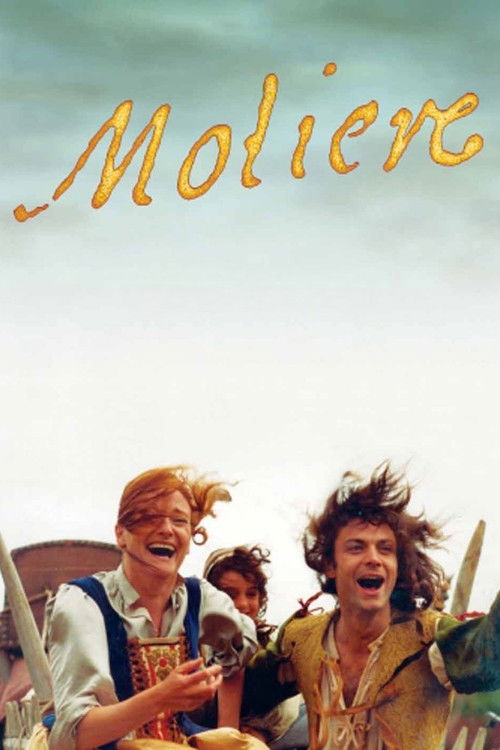
***Molière*** is a 1978 French [drama film](https://en.wikipedia.org/wiki/Drama_film "Drama film") directed by [Ariane Mnouchkine](https://en.wikipedia.org/wiki/Ariane_Mnouchkine "Ariane Mnouchkine").
**PLOT:** ★★★★
**MUSIC:** ★★★★★
**PERFORMANCE:** ★★★★★
**CINEMATOGRAPHY:** ★★★★★
# **LA COMÉDIE-FRANÇAISE — MOLIÈRE**
### **Review by Dr Usman Latif Khawaja**
## **JEAN-BAPTISTE POQUELIN —…
read the rest.
# **MOLIÈRE**
**Film:** *Molière*
***Molière*** is a 1978 French [drama film](https://en.wikipedia.org/wiki/Drama_film "Drama film") directed by [Ariane Mnouchkine](https://en.wikipedia.org/wiki/Ariane_Mnouchkine "Ariane Mnouchkine").
**PLOT:** ★★★★
**MUSIC:** ★★★★★
**PERFORMANCE:** ★★★★★
**CINEMATOGRAPHY:** ★★★★★
# **LA COMÉDIE-FRANÇAISE — MOLIÈRE**
### **Review by Dr Usman Latif Khawaja**
## **JEAN-BAPTISTE POQUELIN — MOLIÈRE**
Jean-Baptiste Poquelin, pseudonym Molière, is the best playwright France has ever produced. He was born in **1622 and died in 1673** while performing in one of his plays. He was born rich, studied to be a lawyer, and then gave up everything to become a writer-actor.
He is the French equivalent of **Shakespeare**, though he wrote satires and farces instead of tragedies, some in prose and some in verse, but they are all as effective as tragedy, if not more so.
His work mainly consists of **12 long plays and six short ballet-plays and pastorals**. Since he is not widely known, **director Laurent Tirard** decided to make a movie about him to acquaint modern audiences with this French genius and what inspired him to write his comic farces.
The French actor **Romain Duris** is cast perfectly as Molière, who is thrown into prison as he is unable to pay his debts after his earlier efforts as a playwright fail in 1644. He is rescued by Monsieur **Jourdain \[Fabrice Luchini\]**, a wealthy businessman, but there is a snag: he will help him win over the charms of a beautiful widowed noblewoman, **Climène \[Ludivine Sagnier\]**, who is being courted by M. Jourdain.
But his beautiful wife, **Madame Jourdain \[Laura Morante\]**, is unaware of her husband's affair. Molière has to do this while he is disguised as a priest living in Jourdain's country villa. While he coaches M. Jourdain, he falls genuinely in love with his charming and beautiful wife, played by an actress of great charm, Laura Morante, who I bet is going to be in Hollywood within six months.
This sets the premise for a delightful and very touching love story between Molière and Madame Jourdain, which has everything from humour to emotion and also provides ample background as to what inspired Molière to write his great works later in his life.
The movie is visually stunning, shot in **Versailles and the old palaces**, full of sumptuous antiques, coiffures and magnificent clothes. Every detail is exquisite. It's beautifully shot in magnificent colours, as well as featuring the stupendous musical background score by **Jérôme Lemonnier**, which is a masterpiece on its own. I believe the producers went to acquire special antiques from as far as Italy, and it shows on the screen.
But it's the emotions that tug at your heart and make this movie triumph in the end, as Molière decides, 13 years later, whether to entertain the **Sun King, Louis XIV**, and his court with a comedy or tragedy. The events of his early life come to help him write a masterpiece, and he establishes himself as the French court's official playwright.
His dilemma also answers the other riddle: whether it's more difficult to make people laugh than cry. Incidentally, Molière was the actor, writer, director and producer all in one. After his death, in 1680, his **troupe** was made into **La Comédie-Française**, or the **French theatre**, which till today is a very prestigious institution.
From 1658 to 1673, he staged 18 plays, including some of these:
- *The Jealous Husband*
- *The School for Wives*
- *Tartuffe*
- *The School for Husbands*
- *Pleasure Things Ridiculed*
- *The Imaginary Invalid*
- *The Flying Doctor*
These and other plays won him the patronage of the **French masses, the court and the king**. He was very innovative in presenting his plays with the help of Italian techniques and modern machines, as his plays, like Shakespeare's, were mostly influenced by Italian artistes such as **Scaramouche**.
But the stamp of his first love affair with Madame Jourdain is indelible on all his creations, just remarking as to how strong love can be in directing and shaping artistic creativity.
The movie shows snippets of his various plays being performed and being enjoyed by the public.
It is rather amusing to see how he entertains the French court and how naive they are, yet it all has a big humorous heart, with a lot of laughs on the way.
The movie works at all levels and is a must-see, not only as a very light-hearted comic love story but also as a historic lesson about the history of France and the evolution of theatre itself, but above all, comedy, satire and Molière. And Molière's work is easily comparable to **Aristophanes**, and later to **Hugo and Dumas**.
## **CONCLUSION**
The movie is a triumph for **Tirard, Duris and Dorante** and can be seen a few times for its entertaining and emotional value.
It goes without saying that it is historically meticulous and offers scenery, sets and other details only France and its perfectly preserved culture can offer to this venture.
Despite being very non-trendy, the movie has been a hit in Europe, the USA and the U.K., which is a triumph for French cinema.
**Thanks for reading.**
show less